Metal buildings and pole barns are durable, versatile, and quick to build. But once temperatures start to swing—especially in Wisconsin—many owners begin to notice issues. The building is hard to heat or cool, condensation forms on the underside of the roof, equipment feels damp, and the space becomes uncomfortable to work in.
At that point, the question usually becomes:
“What’s the best way to insulate this building?”
The Problem Isn’t Just Temperature
In traditional homes, insulation is mostly about comfort and energy efficiency. In metal buildings, moisture becomes a major factor.
Metal surfaces respond quickly to temperature changes. When warm, moist air hits a cold metal roof or wall, condensation forms—sometimes enough to drip. This “sweating” can lead to water dripping from ceilings, damp tools and materials, rust, and an overall uncomfortable environment.
Why Traditional Insulation Struggles
Materials like fiberglass can slow heat transfer but don’t stop air movement or moisture. Warm, moist air can still reach the metal surface, condensation can form behind the insulation, and performance depends heavily on perfect installation. Even when it looks insulated, the building can still feel cold, damp, or drafty.
What Makes Spray Foam Different
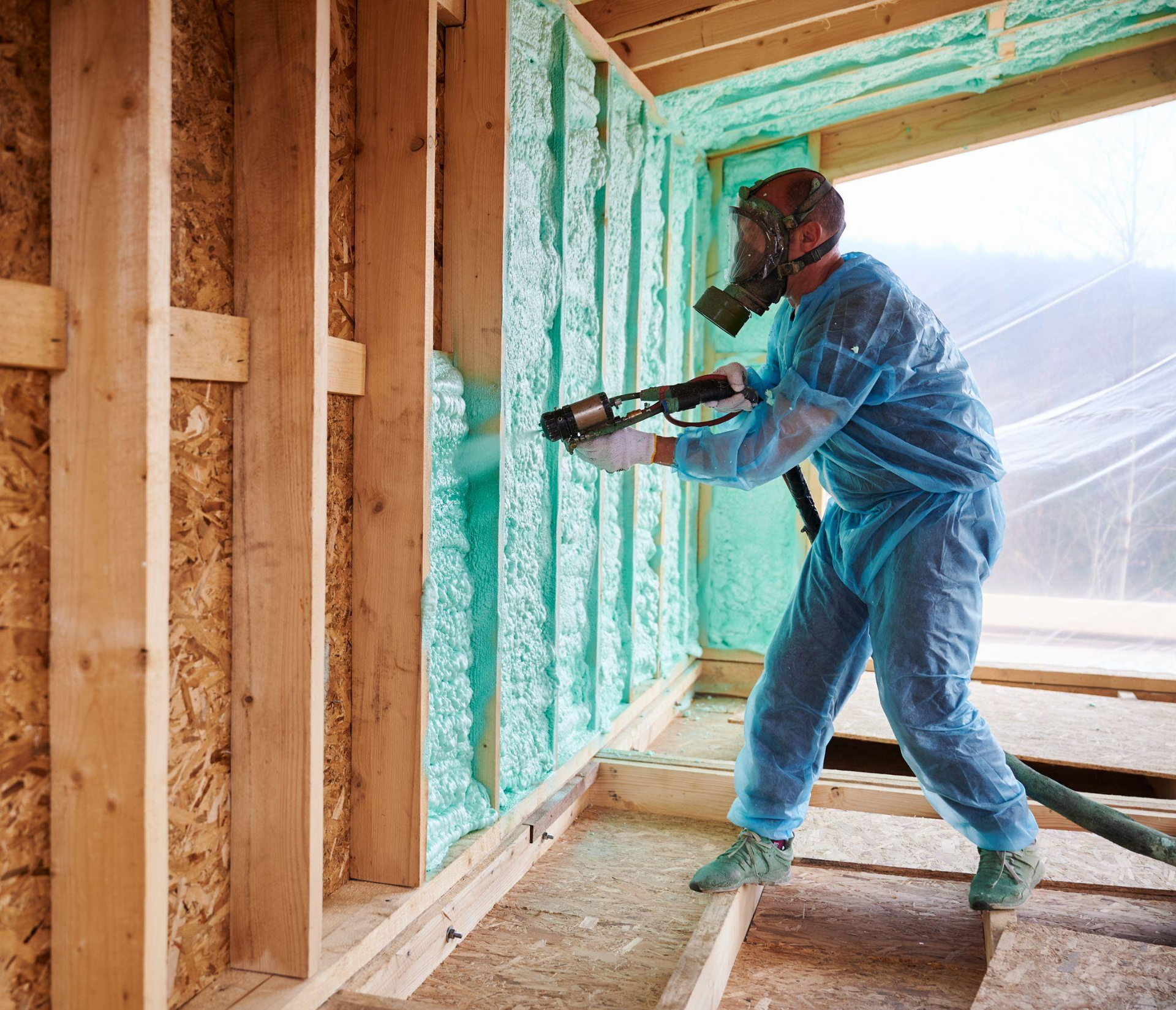
Spray foam insulation works differently because it both insulates and air seals. It expands and bonds directly to the metal surface, filling gaps and creating a continuous barrier that changes how the building performs.
How Spray Foam Helps
Reduces condensation: By limiting air movement, spray foam helps prevent warm, moist air from reaching the metal surface, reducing the conditions that cause condensation.
Improves temperature control: It slows heat transfer, making the building easier to heat in winter and cooler in summer, with more consistent temperatures and less strain on equipment.
Creates a tighter building: Because it adheres directly to the structure, it reduces drafts, seals seams, and creates a more controlled interior environment.
Why It’s Often the Right Choice for Larger Spaces
In larger buildings, small inefficiencies add up quickly. Air leakage is more significant, temperature swings are more noticeable, and moisture is harder to control. Spray foam addresses multiple issues at once, which is why it’s commonly used in pole barns, workshops, storage buildings, agricultural buildings, and light commercial spaces.
Cost vs. Value
Spray foam typically costs more than traditional insulation, but in metal buildings it often replaces multiple solutions at once—insulation, air sealing, and moisture control. That combination can make it a practical long-term investment, especially when the building is used regularly or stores valuable equipment.
A Simple Way to Think About It
In a metal building, the challenge isn’t just keeping heat in or out—it’s controlling air movement, temperature, and moisture. Spray foam helps manage all three.
When It Makes the Most Sense
Spray foam is often a strong option when condensation is already an issue, the building is used frequently, comfort matters, equipment needs protection, or traditional insulation hasn’t performed well.
One Last Thought
Metal buildings behave differently than traditional homes, and the insulation approach needs to reflect that. In many cases, spray foam provides a solution that addresses air, heat, and moisture together—helping turn a cold, damp space into one that’s more comfortable and usable year-round.