In previous posts, we discussed
fiberglass insulation and
cellulose insulation. Few insulation products generate as much discussion as spray foam.
Some contractors swear by it. Some homeowners love it. Others hear the price and immediately begin clutching their wallets in fear.
So what exactly is spray foam insulation, and why has it become so popular in modern construction and energy retrofit work?
The answer comes down to one word:
Air sealing.
What Is Spray Foam Insulation?
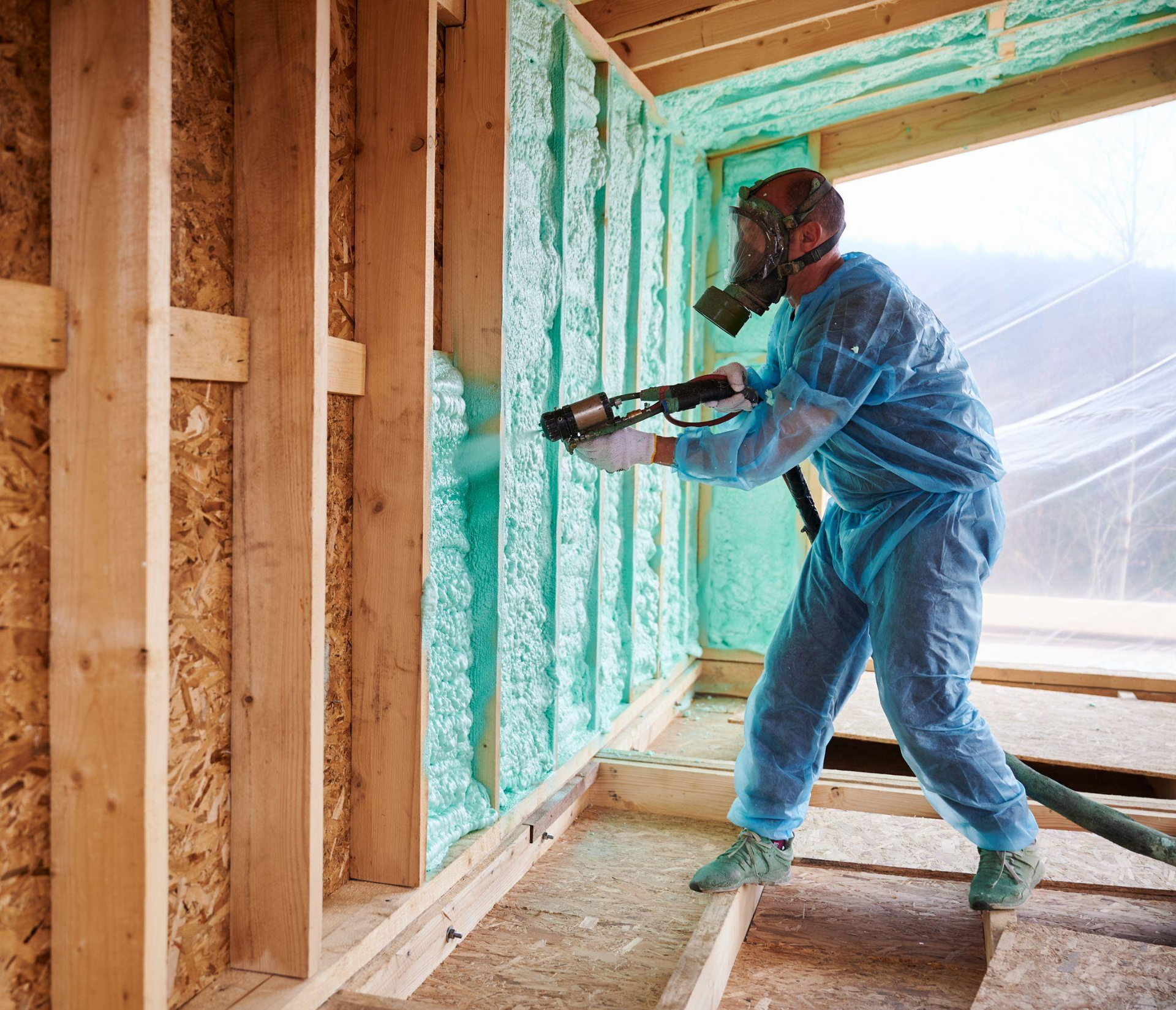
Spray foam insulation is a material that expands after application, filling gaps, cracks, and cavities while creating an insulating layer. Unlike fiberglass or cellulose, spray foam does more than slow heat flow. It can also dramatically reduce air leakage.
That combination can make homes:
- more comfortable,
- more energy efficient,
- and less drafty.
There are two primary types used in residential construction:
- open-cell spray foam,
- and closed-cell spray foam.
Open-Cell vs. Closed-Cell
Open-Cell Spray Foam
Open-cell foam is:
- lighter,
- softer,
- and less dense.
It expands significantly during installation and is often used for:
- wall cavities,
- rooflines,
- and sound reduction.
It provides insulation and air sealing but is more vapor permeable than closed-cell foam.
Closed-Cell Spray Foam
Closed-cell foam is:
- denser,
- more rigid,
- and has a higher R-value per inch.
It also adds some structural rigidity and resists moisture better than open-cell foam.
Because of its high R-value and air-sealing ability, closed-cell foam is commonly used in:
- rim joists (box sills),
- crawl spaces,
- basements,
- and areas with limited space.
In cold climates like Wisconsin, closed-cell spray foam is frequently used in difficult air-leakage areas.
Why Spray Foam Performs So Well
Traditional insulation materials mainly slow conductive heat transfer.
Spray foam also attacks another major problem: Air movement.
If air can leak through cracks and gaps, heat moves with it.
That means:
- drafts,
- cold floors,
- uneven temperatures,
- and higher heating bills.
Because spray foam expands and seals openings, it can greatly reduce:
- stack effect,
- infiltration,
- and hidden air leakage.
This is why many homeowners notice comfort improvements immediately after installation.
The “Tight House” Question
One of the most common concerns about spray foam is this:
“Can a house become too tight?” The short answer:
Yes — but that is not necessarily a bad thing.
Older homes often leak air everywhere:
- attic penetrations,
- rim joists,
- wall cavities,
- around windows,
- plumbing openings,
- and wiring holes.
That uncontrolled leakage wastes energy and can introduce moisture problems.
A tighter home is usually more efficient and comfortable. However, very tight homes may also need:
- controlled ventilation,
- bath fans vented properly,
- or mechanical fresh-air systems.
Modern building science focuses on:
- tightening the structure intentionally,
- then ventilating it properly.
Spray Foam Is Not Cheap
Here comes the painful part.
Spray foam is usually significantly more expensive than:
That cost causes many homeowners to pause.
But spray foam is often used strategically rather than everywhere.
For example:
- spray foam at box sills,
- cellulose in the attic,
- fiberglass in some wall cavities.
A hybrid system can balance:
- performance,
- budget,
- and practicality.
Is Spray Foam Always Better?
Not necessarily.
Spray foam is an excellent product when:
- properly installed,
- used in the right application,
- and integrated into the overall building system.
But every insulation material has strengths and weaknesses.
Fiberglass, cellulose, and spray foam all have situations where they work very well.
The best choice often depends on:
- budget,
- the structure itself,
- moisture conditions,
- and project goals.
Installation Quality Matters — A Lot
Spray foam is not forgiving of poor installation.
Improper mixing or application can lead to:
- odor problems,
- shrinking,
- poor curing,
- gaps,
- or inconsistent performance.
Experience matters.
Proper ventilation during installation also matters, and homeowners may need to stay out of portions of the home temporarily during application.
Where Spray Foam Really Shines
Spray foam tends to perform best in:
- difficult air leakage areas,
- rim joists,
- irregular cavities,
- crawl spaces,
- cathedral ceilings,
- and areas where high R-value is needed in limited space.
It is especially effective where traditional insulation struggles to stop moving air.
So, Is Spray Foam Worth It?
For some homes, absolutely.
For others, a combination of:
- air sealing,
- cellulose,
- fiberglass,
- and targeted spray foam
may provide the best overall value.
The goal is not simply adding insulation.
The goal is creating:
- comfort,
- durability,
- energy efficiency,
- and a healthier home.
And sometimes, stopping air movement matters just as much as adding R-value.