Concrete lifting contractor in Madison services involve raising and leveling sunken concrete slabs using two primary methods: mudjacking and polyurethane foam injection.
If you’ve noticed your driveway dipping, your patio pulling away from the house, or your sidewalk creating a tripping hazard, you’re not alone. Concrete settles. Soil shifts.
Water sneaks in and changes everything underneath the surface. And suddenly, something that used to feel solid now feels… uncertain. It can be frustrating and even a little stressful.
Do you rip it all out? Patch it? Ignore it and hope for the best? Most homeowners just want a clear answer and an honest fix.
So let’s slow this down and make it simple. Because once you understand how concrete lifting works, the decision becomes much easier.
Why Concrete Sinks in the First Place
Concrete is heavy. The soil underneath it carries that weight every single day. Over time, a few things can cause problems:
- Soil erosion from water runoff
- Poor soil compaction during construction
- Freeze and thaw cycles
- Plumbing leaks under slabs
When the soil shifts or washes away, the slab loses support. That’s when you start seeing cracks, uneven surfaces, or sloping sections.
This is where a concrete lifting contractor in Madison comes in. Instead of tearing out the slab, they lift it back into place by stabilizing the soil underneath.
But how exactly do they do that?
Mudjacking: The Traditional Approach
Mudjacking has been around for decades. It’s straightforward and reliable.
Here’s how it works:
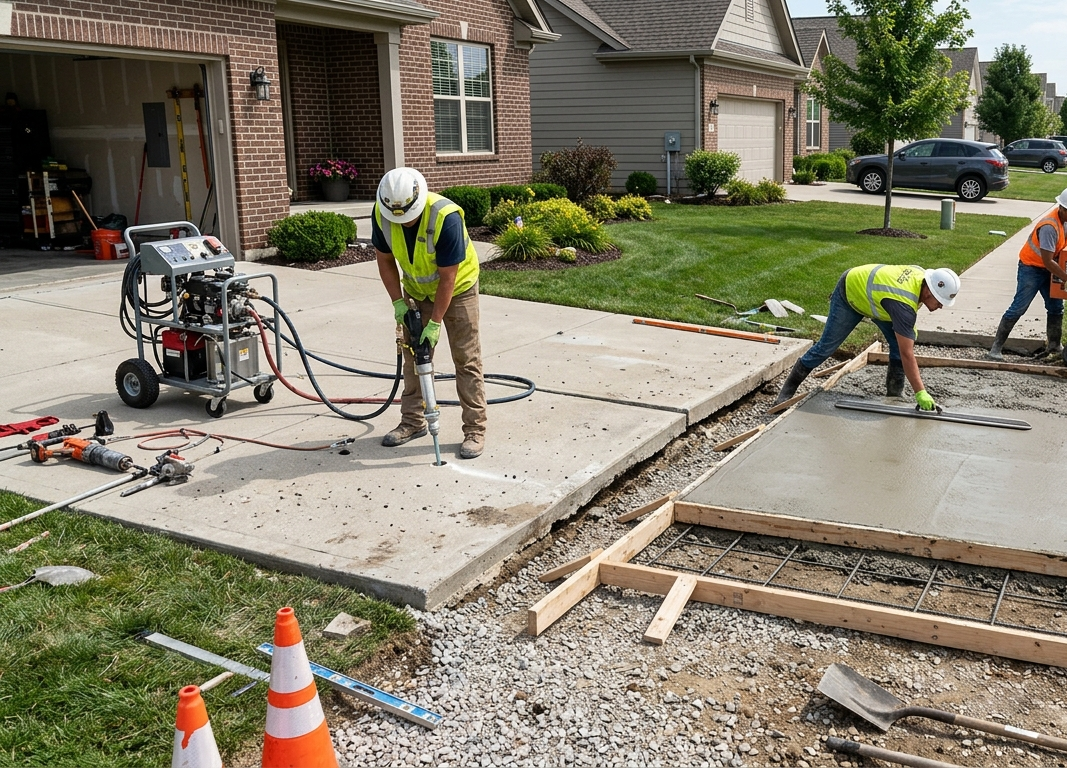
- Small holes are drilled into the concrete slab
- A thick slurry mixture made of water, soil, and cement is pumped underneath
- The pressure lifts the slab back to level
- The holes are patched
It sounds simple because it is.
Pros of Mudjacking
- Time-tested method
- Effective for large, heavy slabs
- Uses natural materials
Things to Consider
- The material is heavy, which can add weight to already unstable soil
- It may take longer to cure fully
- Larger drill holes are required
Mudjacking is often chosen for older driveways or sidewalks where traditional methods feel more comfortable to the homeowner.
Polyurethane Foam Injection: The Modern Method
Polyurethane foam injection is newer, and it’s gained popularity quickly.
The process looks similar at first:
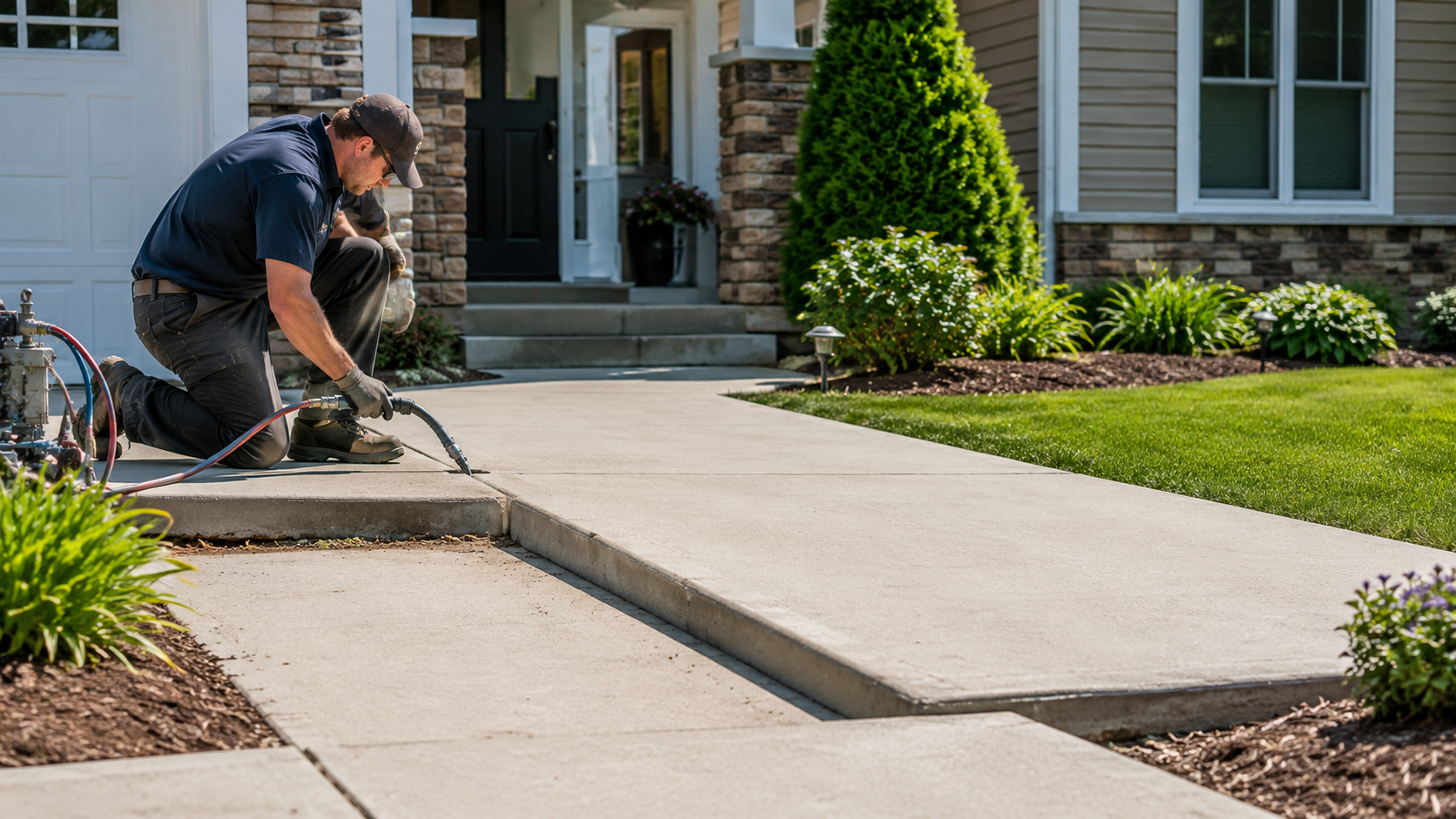
- Small holes are drilled into the slab
- A lightweight expanding foam is injected underneath
- The foam expands, fills voids, and lifts the concrete
- The holes are sealed
But the material behaves very differently.
Why homeowners like foam injection:
- It’s lightweight, so it doesn’t overload the soil
- It expands quickly and cures fast
- The drill holes are smaller
- It resists water absorption
Many homeowners are surprised at how precise the lift can be. The expansion can be carefully controlled, allowing technicians to raise the slab gradually.
A knowledgeable concrete lifting contractor in Madison will recommend the right method based on your soil conditions, slab size, and long-term stability.
Mudjacking vs. Foam Injection: How Do You Decide?
It really comes down to a few key questions:
- How unstable is the soil underneath?
- How large and heavy is the slab?
- How quickly do you need the area back in use?
- Is water intrusion part of the problem?
There isn’t a one-size-fits-all answer. That’s why inspection matters.
And here’s something many people overlook: if soil movement caused your slab to sink, you may also want to evaluate your insulation and moisture control inside the home.
Some companies that offer
home insulation services in Madison understand how air sealing and moisture management affect soil conditions around your foundation.
It’s all connected. Water drainage, insulation performance, and soil stability. When one area struggles, others often follow.
How This Ties Into the Bigger Picture of Your Home
Concrete problems are rarely isolated. Poor drainage, insulation gaps, and moisture buildup can all contribute to soil movement.
That’s why companies offering both lifting and home insulation services in Madison tend to take a broader view. They look at airflow, moisture control, and structural integrity together. It’s not about fixing one crack. It’s about protecting your home long term.
And that peace of mind? It matters.
If you’re seeing signs of sinking concrete and want honest guidance tailored to your home, reach out to Duerst Insulation Technicians. Our team takes time to understand your concerns, walks you through practical solutions, and advocates for what truly protects your home.
No pressure. Just real expertise and personalized support designed around you.