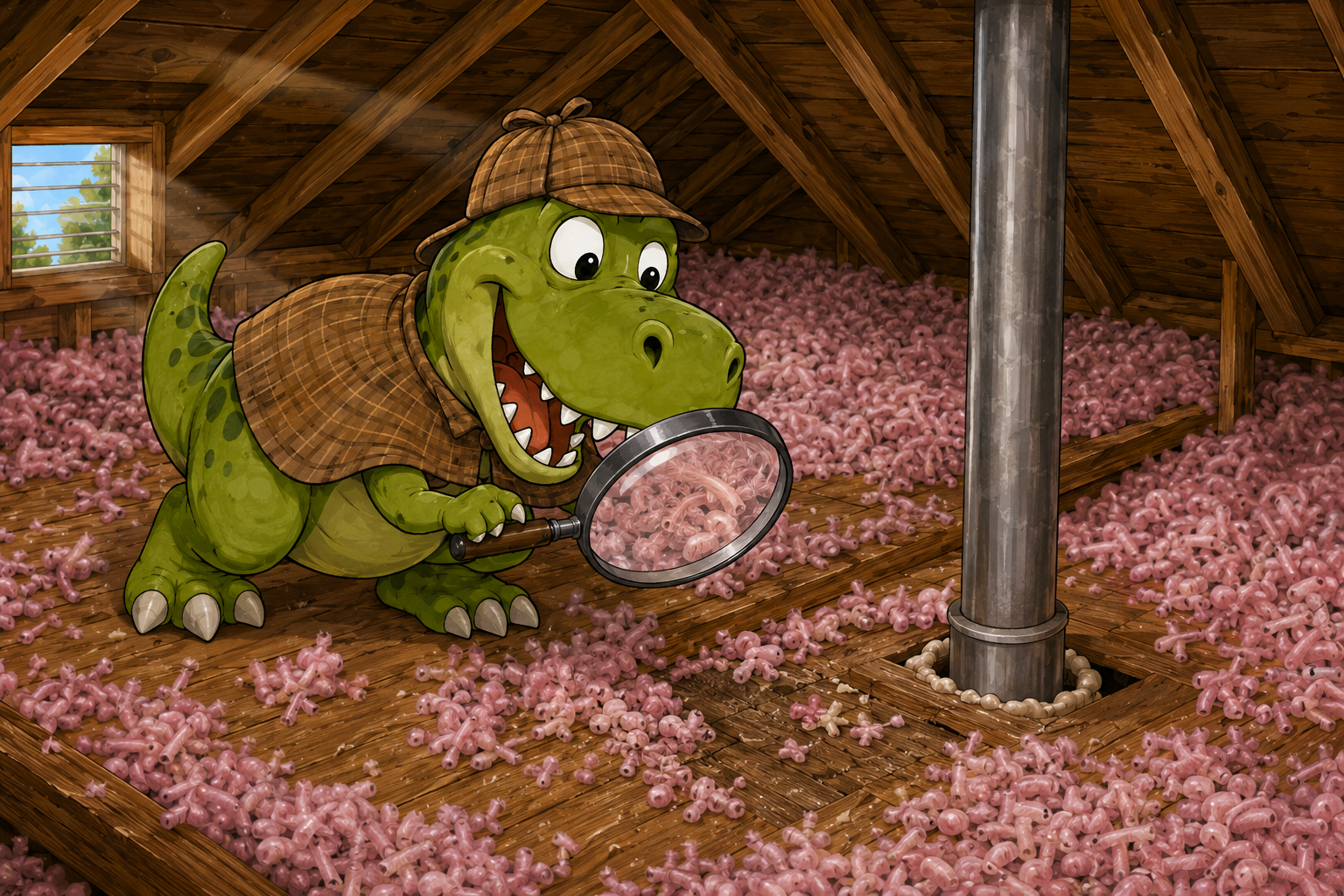
What’s the difference between an attic and a zoo?
The attic (probably) doesn’t have lions and tigers and bears… but maybe just about everything else.
If you’ve ever been lying in bed at night and heard scratching, thumping, or the occasional “what was THAT?” overhead, you’re not alone. Things really do go bump in the night.
Before assuming the worst, let’s take a look at what might actually be going on above your ceiling—and why it matters.
The Usual Suspects (No Safari Required)
Your attic is warm, dry, and protected from predators. To wildlife, that’s prime real estate.
Common attic visitors in Wisconsin:
- Mice/Rats
- Squirrels (gray/red)
- Raccoons/Opposums
- Bats
- (Occasionally) birds
These animals are usually not trying to haunt you—they’re just trying to live rent-free.
What Those Noises Actually Mean
Not all attic sounds are animals. Here’s a quick breakdown:
Light scratching or scurrying:
Likely mice or squirrels moving through insulation
Heavy thumping or slow movement:
Could be raccoons (they are not subtle)
High-pitched squeaks or fluttering:
Often bats or small rodents
Popping or creaking:
Wood expanding and contracting with temperature changes
Whistling or whooshing:
Air movement from leaks and poor sealing
Why Insulation Plays a Big Role
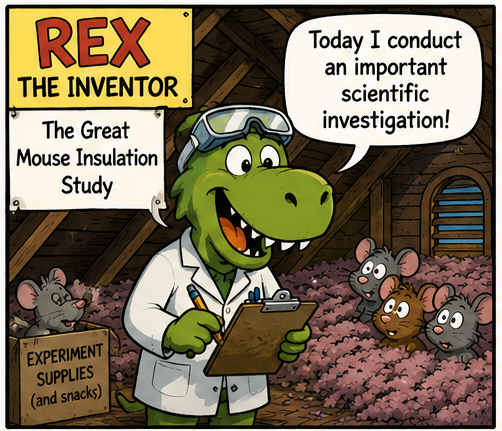
Animals are not just in your attic—they interact with your insulation.
They will:
- Tunnel through it
- Compress it
- Tear it apart for nesting (and make more tenants)
- Leave behind… let’s call it “evidence”
Result:
- Reduced R-value
- Uneven coverage
- More air movement
- Increased energy bills
That cozy attic they love? It becomes a performance problem for your home.
How They’re Getting In
Animals do not need much of an opening.
Common entry points:
- Roof vents
- Soffits
- Gaps along the roofline
- Around chimneys or flashing
- Damaged fascia
Once one finds a way in, others often follow.
The Hidden Cost of “Attic Wildlife”
This is where it becomes more than just a nuisance.
Animal activity can lead to:
- Insulation damage
- Air leakage pathways
- Moisture problems
- Odors entering living space
- Reduced indoor air quality
And yes… higher heating and cooling costs.
What You Can (and Should) Do
Step 1: Confirm activity
If you hear consistent noise, it’s worth investigating.
Step 2: Call your local animal control agent
You do not want to be chasing raccoons through your house.
Step 3: Address entry points
Sealing access is critical—or the problem returns.
Step 4: Evaluate insulation
Damaged insulation often needs repair or replacement.
Step 5: Improve air sealing
Helps prevent future entry and improves efficiency.
A Quick Reality Check
If your attic sounds like it has a social life:
- You probably have unwanted guests
- Your insulation has likely been compromised
- Your home is losing energy
The sooner it’s addressed, the better.
Final Thought
Your attic should be quiet, sealed, and properly insulated—not a wildlife habitat. If it sounds like something is living up there… something probably is.
If you suspect activity in your attic, we can help assess insulation conditions and identify problem areas—so your attic goes back to being part of your home, not part of the local ecosystem.